Showing posts with label Mary Magdalene. Show all posts

Wednesday, April 27, 2011

Here I Am

Readings: Acts 2:14a, 22-32, Psalm 16, 1 Peter 1:3-9, John 20:19-31


What was different about the risen Christ?


We can infer from the gospels that there was something unfamiliar in his appearance. Last week, Mary Magdalene met him outside of his tomb and mistook him for a gardener. Not until he spoke did she recognize him, and then came the joy of being unexpectedly reunited.

This week we recall his encounter with the disciples, who similarly do not seem to know him at first. He greets them, but not until he offers a sign—the wounds of crucifixion—does the light of recognition dawn on them.

Jesus walks about in anonymity. A resurrected messiah, we know, would have been wild news—people would have wanted to see him. Certainly the crowds would have exceeded those he drew before, even when performing miracles. But the risen Christ is obscure.

Even Thomas, an apostle, does not believe the news. His brethren assure him, in their excitement, that they have seen Jesus, that he has been among them again; but Thomas scoffs, saying, ‘Unless I see the mark of the nails in his hands, and put my finger in the mark of the nails and my hand in his side, I will not believe" (John 20:25).

This seems a gruesome request. But then, Thomas has been asked to wrestle with an unprecedented idea: that death might be reversed.

Jesus is understanding; he responds to Thomas’s insistence upon tactile proof. Put your hand in my side, if you must; he says. It’s me. And Thomas knows him.

There’s something different about the risen Jesus. Those who walked with him before do not know him until he declares himself. They do not doubt him once he is revealed; but they are hapless until the anonymity is peeled back.

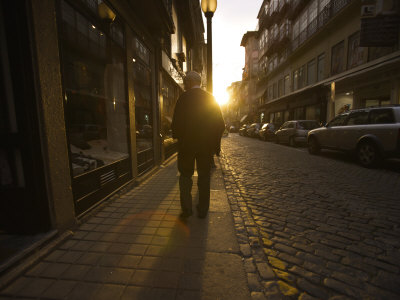
This seems, to me, to be such a powerful injunction to be kind to those who walk among us. It is disquieting that the apostles saw him without seeing him; if they, who had known him in life, were so sightless before him in his new life, how are we, who see him only in the gospels, to recognize him?

Jesus said, “What you do to the least of those among you, you do to me.” He suggested he could be sought in the meek, in those brought low by their circumstances, in the hungry and in the searching. In the eyes which we often avoid meeting, there he is. In the lonely corners we do not visit, he waits.

I read a story this week about a young girl who was taunted and physically abused in public because of her appearance. This young twenties person was shifting between genders, and something about that piqued her torturers; they decided to assault her. To teach her a lesson? To put her “in her place”? Such acts defy reason. We are so illogically prompted to be cruel to one another.

The mystery of Easter is this: Jesus was crucified. Jesus is risen. Jesus walks the world again. We do not see him when we look for the man who healed, who walked on water, who fed the masses and defied Roman authority; that figure has departed us forever.

But what about those from whom we shrink? In the teenager reviled by their peers for daring to be who they are internally compelled to be: can’t we look for Christ there? In the face of the girl who was beaten, do we sense a glimmer of recognition?

The lesson of this season is that God does not abandon us to our fallible flesh. The world, post-resurrection, is a dress rehearsal, is an unset stage awaiting the last revelation. What we do in this moment has bearing on that; we have to ready our eyes to see.

Through our faith, we anticipate clear sight: “Although you have not seen him, you love him; and even though you do not see him now, you believe in him and rejoice with an indescribable and glorious joy” (1 Peter 1:8). By acts of loving kindness to those we encounter, we attest our belief.

Hands which need to feel torn flesh belong to those who have not yet seen. Hands which reach out to greet those who seem, at first, just strangers, trust in the resurrection. We give our love to others knowing that it will someday come back to us, that Christ will someday from them say, “Here I am.”

photo credit here

Wednesday, April 20, 2011

"I have seen the Lord!"

Readings: Jeremiah 31:1-6, Psalm 118:1-2, 14-24, Colossians 3:1-4, John 20:1-18, Matthew 28:1-10


Some two millennia ago, Mary of Magdala took a Sunday morning stroll to the tomb of her rabbi, the man they’d called “messiah”.


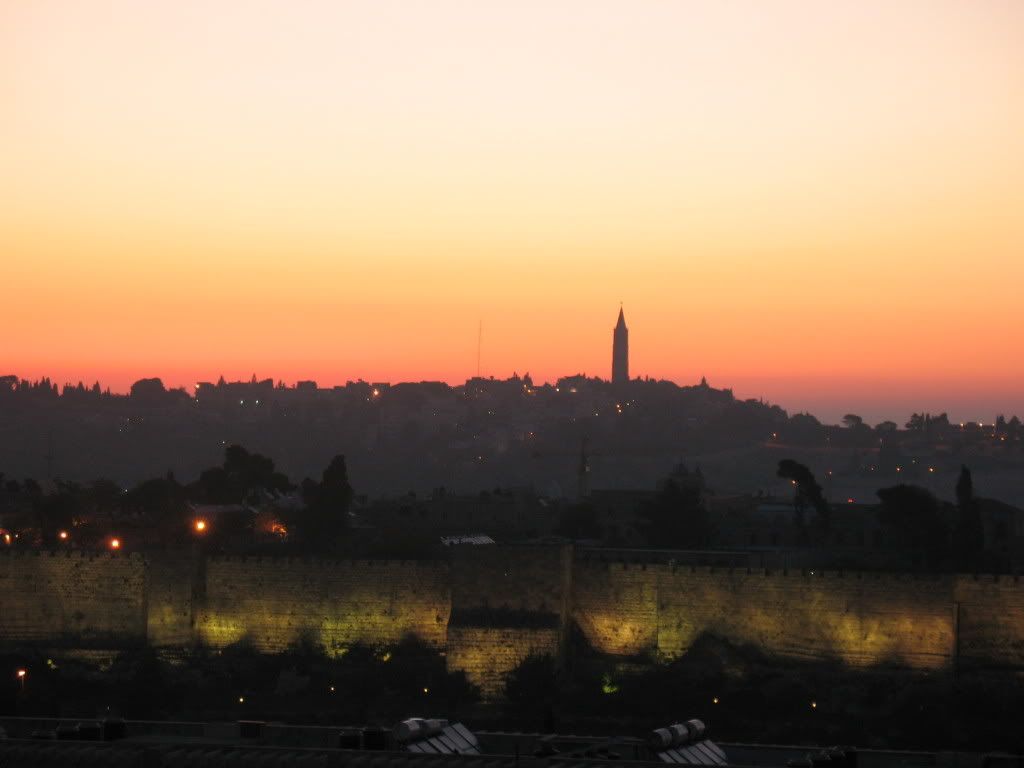
She walked through the streets of Jerusalem before the sun rose, John tells us, to get there. Maybe grief had jarred her from her sleep; maybe she’d never managed to capture sleep at all. The gospels don’t offer many details. We only know that she was suffering from the loss of him, as were all the disciples.

Perhaps she wanted to pay her respects. Perhaps she wanted to sit outside the tomb and question God: Why? Whatever her aim, she found that the bleak calm of the pre-dawn was shattered when she discovered that the stone which was used to seal the tomb had been rolled back.

The Gospel of John suggests that she ran to the disciples to beg their advice and supervision before proceeding. Other gospels present the moment differently: she and a companion are met by an angel alone, without the male disciples intervening. Whatever the case, Mary found herself before the open and empty tomb, and the whys? in her head were forced to morph.

It is Mary who is first privy to the miracle of Jesus’ resurrection. The gospels, again, present the miracle with variations: in John, she encounters the risen Jesus but does not recognize him; in Matthew, an angel announces his resurrection and fills her with fear.

And then she experiences the first post-resurrection dawn: Jesus speaks her name, and she knows. Or: Jesus stops her flight, greets her, and she knows. Light enters earth once again.

This is the wonder of Easter. On the Friday of Jesus’ death, the hopes of all the apostles seemed hopelessly disappointed. Messiahs were not supposed to die; they were supposed to radically, politically and noticeably transform the earth. Yet he left in his wake a still tumultuous Rome, a world still plagued by persecutions and injustices, and followers who were, quite frankly, stumped.

And yet the deed had been done; Christ, the anointed one, had initiated a period of new life, a new kingdom of God. Mary of Magdala was the first to be gifted with a viewing of it that Sunday morning; each Easter subsequent, our eyes have searched for it, too. We wake up and wait for God to call our names. We hold our breaths, anticipating Jesus’ coming in glory.

How far are we beyond Rome? Our kingdoms still disappoint us. This Easter morning, peace will elude so many people. As war rages on in Libya, as shots continue to ring out in the direction of Syrian and Yemenis protestors, peace will seem a distant prospect. Japan will still be struggling to recover from a devastating earthquake and nuclear leaks. Egyptian women will still be wondering how it is that they, though they thought they’d secured their freedom by participating, frequently at the fore, in this year’s protests, have once again been relegated to second class citizens. Our gulf will still be polluted and the people who depend on it will remain out of work. Cubans will have traded dictators. Tibet will still not be free.

The earth will spin to face the sun on Sunday, and light will fall across the regions slowly, and so many will not know it as peace-filled dawn. So many will not see immediate evidence of the kingdom of God.

And yet, the mystery for us is, each year in succession: he has risen. Indeed, Christ has risen. Death was defied. Something new began.

We are promised peace in God’s kingdom, and are still waiting for clarification on how that will come. Two thousand years have taught us, as three days taught the disciples, that there will be nothing conventional or predictable about God’s ultimate gift. We do not get peace here because he died; we are charged to work for it because of his precepts. Our wars and troubles are, to the degree which we create them, our responsibility; our souls are his.

We come to church together on Easter to celebrate Jesus’ new life. We come anticipating new life in Jesus. We gather in the pews because a new light has dawned. We wait for the risen God to call our names. We trust that he will.


photo credit here