Tuesday, February 22, 2011

From Libya to Lilies of the Field

Readings: Isaiah 49:8-16a, Psalm 131, 1 Corinthians 4:1-5, Matthew 6:24-34


At moments, this week’s readings feel like a prayer for today.


We believe: we have the right to live in a world which acknowledges and honors the dignity of all human beings. This belief arises from the same place which feeds our faith in God. It’s woven into us, it seems; it sustains us, and translates into compelled action when we’re most in need.

It is also foundational to democracy, and expresses the dearest hopes and visions of the monotheistic traditions. In the States we’ve called that dignity a grace, and an inalienable one: our founding documents credit the creator with instilling our human drive to pursue full lives, full enjoyment of our liberties, and happiness. We accept freedom as a given, and here, we’ve frequently been fortunate enough to enjoy it.

The global events of the last month serve as a reminder that there are still those who would deny that all are endowed with dignity, or that political systems should be constructed in a way which honors them. Our attention has been repeatedly drawn to the reality that tyrants still abound. But the reactions of our brothers and sisters in the world community to their various oppressions have also renewed the idea that our drive to be free is innate.

In Tunisia, first, oppressive regimes were protested; then Egyptians awed the world by collectively and forcefully protesting their dictator out of office. Shows of support in Tehran evolved into protests on behalf of the Iranian people themselves; and now, in Libya, we see another brutish leader begin to fall. Our mutual humanity compels our celebration for those who now, because of their own persistence and principles, have new possibilities before them. In the Middle East and Africa, in places which mere weeks ago acknowledged no inborn human excellence, the citizenry have become effulgent. They humble us all.

Our readings in scripture this week exalt them, among all who have ever been shackled by arbitrary systems, alongside all who have ever preferenced defending the human spirit above everyday concerns. We celebrate what’s happening across the globe; the word of God celebrates all such movements with us.

In Isaiah, YHWH says, in some favorable time, “I have answered you [supplicating people]”(Isaiah 49:9). That answer came in the form of freed prisoners, people plucked from the darkness; the spiritually hungry were enabled to “feed along the ways all the bare heights…their pasture;” we are assured that “they shall not hunger or thirst, neither scorching wind nor sun shall strike them down, for he who has pity on them will lead them, and by springs of water will guide them” (Isaiah 49:9-10).

The pitying person has entered history in a number of forms. Jewish Messianic hopes look forward to this figure, and have seen hints of it in various great historical figures. These weeks in the East, pitying people rose up amongst the people, and soon outnumbered the tyrants by many—people have been led into freedom with themselves as guides, their own human ingenuity to thank. And we certainly know that, in the distant past and now with us always, that pitying freedom-giver was Christ himself.

We are all God’s, Isaiah tells us, and the Divine does not forget its children: “I will not forget you. See, I have inscribed you on the palms of my hands” (Isaiah 49:15-16). That we are God’s and that God loves us does not always translate into history in the ways we might hope; seas are not always parted for the oppressed, nor does manna always fall from Heaven to feed the hungry. But we’re not forgotten; God desires our freedom, even when we must use what has been given to us to pursue it ourselves. And God looks forward to these days of great success, and rejoices in them: “Sing for joy, O heavens, and exult, O earth; break forth, O mountains, into singing!” (Isaiah 49:13)

We’re learning from our brethren, and also from the scriptures. What has happened in Egypt, in Tunisia, in Iran and in Libya could not have occurred without human initiative. None of the movements has been entirely without its troubles, and some have been lost along the way; we can mourn that while simultaneously standing in deference before the strikingly simple beauty of vast groups of people asserting their rights to be recognized and respected.

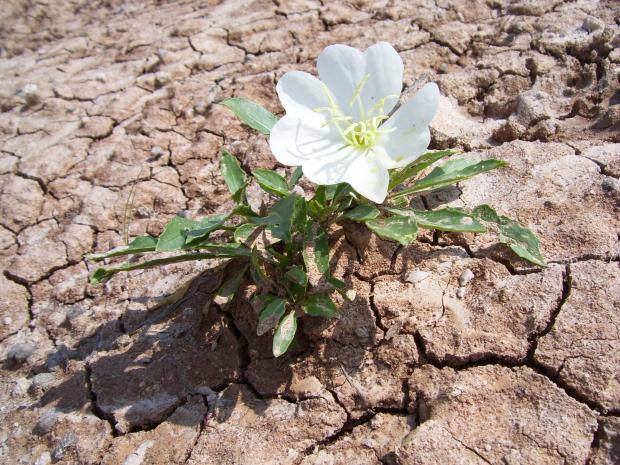
The media have made us privy to various awesome sites from these protests and movements, which at the same time seem to remain unplagued by the unnecessary: like lilies of the field, like birds of the air, these groups of people have shelved concerns about creature comforts and appurtenances in favor of dealing with what’s immediate (Matthew 6:28, 26).

The gospel reading assures us that no being can serve two masters, a truth any person who strives to be free knows fully (Matthew 6:24). The regimes which are falling across the globe might have remained, if citizens beneath them had valued maintaining the unhappy status quo above human dignity; they continue to fall because people are serving, instead, freedom. They fall because the human impulse is toward grace and not false servitude.

The inclination toward grace, which is embraced as we struggle for freedom, seems to be spreading rapidly without abating. It’s skipping from nation to nation, and it’s something to behold. Our readings anticipate such flourishings as a consequence of God’s great love, and celebrate them at length; they choose such godliness above the “wealth” of temporal holdings.

We’re prevented, by space and other factors, from joining directly in the protests, but we can continue to awe, with the scripture as our cantor or the leader of our prayers, and to offer what support we can.

We can offer to our distant brothers and sisters the small gift of our remembrance, and the benefit of our prayers. We can, from the humble position of our different situations, say with the Psalmist: “O Lord, my eyes are not raised too high…I do not [pre]occupy myself with things too great and too marvelous for me…But I have calmed and quieted my soul” (Psalm 131:1). What the protestors are accomplishing is its own gift; it reminds us that God did, indeed, make a great world, one which, though frequently muddled by misfortune, nonetheless has the potential to be the dwelling place of greatness.

photo credit here

Tuesday, February 15, 2011

"Si, se puede!" (It can be done) -Cesar Chavez

Readings: Leviticus 19:1-2, 9-18, Psalm 119:33-40, 1 Corinthians 3:10-11, 16-23, Matthew 5:38-48


I sometimes find myself confused by the popular political rhetoric, which seems to suffer from a lack of self-awareness. We’re probably all familiar with the claims we Americans like to make about ourselves and our nation, among them the popular declaration that we’re a centrally Judeo-Christian nation. Unfortunately, this designation is pointed to with the most fervor not when we’re promoting issues of justice, but when we’re striving to make our image more exclusive.


We’re made to live in fear of prayer being taken out of school, told that it’s foundational despite its relatively new introduction into public education realms. We’re asked to consider what life would look like if we took God’s name off of our currency, removed a line from the pledge, or extracted Decalogue effigies from our courthouses. When people protest such exclusive iconography, daring to suggest that it flies in the face of truly democratic ideals, they’re subject to scorn, or even denounced as harbingers of the apocalypse.

People truly want to believe we’re a Christian country. But why does it seem that people only want to make this claim in order to draw lines in the sand: to limit marriage, to prevent mosques from being built, to force the recitation of a name that all people do not know? Do we truly believe such behavior pleases God, or is a benefit to heaven? And why is it that the desire to see the stars and stripes as a Christian banner seems to fade when the issue at hand is not a stamp on a bill, but the well-being of our neighbors?

We cannot claim to be Judeo-Christian if we’re willing to eschew the values which really are in scripture. One which appears in both of testaments today is that of care for our neighbors, clearly seen among foreigners. Across both traditions, the holy books demand that we care for the foreigners in our midst: Leviticus 19 counts among God’s mitzvoth the imperative to feed our guests, declaring “you shall not strip your vineyard bare, or gather the fallen grapes of your vineyard; you shall leave them for the poor and the alien” in the name of God (Leviticus 19:10).

The word “alien” is a very specific one within Hebrew; there can be no doubt that this evokes concern for those foreign to Israel, visitors from abroad. The chapter goes on to demand that God’s people not profit from the blood of their neighbors, and, critically, that they love them as equal to themselves (Leviticus 19:16, 18).

The Israelites knew what it was like to live as foreigners in a strange nation. Perhaps in these moral precepts we can hear echoes of the pains they suffered under unwelcoming communities: inability to properly celebrate their religious traditions; relegation to the most obscured factions of society; the mark of “other”, somehow emblazoned upon them abroad, so that they’re never really integrated, never really given a seat at their neighbor’s tables. It’s easy to understand why, after the Exodus, they’d find these Levitican laws particularly poignant: having suffered as immigrants, how could they ever justify causing an immigrant to suffer?

Our gospel reading shares this awareness. The word of Jesus, as given in Matthew, also is compelled by the notion that selfless love is supreme. We give it without demanding equal measure; we love others to acknowledge their equal dignity. And so if someone asks of us our coat, we are to give them coat and cloak; if someone begs from us, we are not to refuse (Matthew 5:40, 5:42). We’re to give as is requested of us, and then go beyond.

These verses address only what is asked of us; they do not address the unasked of, or basic justices. But they certainly expect us to anticipate those needs and address them with the same fervor. Love is to become second nature.

This extends to expanding our notion of “neighbor,” stretching our notions of the word to include not only those with whom we’re familiar, but all, and everywhere: “And if you greet only your brothers and sisters, what more are you doing than others? Do not even the Gentiles do the same?” (Matthew 5:47) A Christian family does not exclude; all belong to it, including those who we don’t initially think to welcome. In fact, we’re perhaps to be particularly attentive to their inclusion; leaving some at the margins because of limited imaginations is not acceptable.

These are, as is said, truly “Judeo-Christian” principles. We are to feed the foreigner; letting a foreigner go hungry defies God’s law. We’re to love them. We’re to make sure our societies are not constructed in a way which leads to profiting from their misfortune. We’re to see that their basic needs are met. We are, in the end, to see "aliens" as neighbors, refusing to give the term “alien” power; we are to make them family.

And so I wonder how sincere the pundits are when they insist that we remain true to our Judeo-Christian principles, while in the same breath insisting we further alienate already marginalized people. If “Judeo-Christian” defines our value system: we could not continue with the immigration policies which are becoming pervasive, and steadily worse.

I beg attention to the scriptures, read in a world that purports to take them seriously. This week in Arizona, a public official proposed modifying the legal system to make immigration status checks requisite at hospitals. The implications of this are obvious. A mother should not be made to choose between rushing her ill child to the emergency room and facing deportation, or gambling with her child’s health; a person should not be made, moreover, to make that choice even if “only” they are at stake. A law like this would necessarily have blood on its hands, but seems to be moving forward because the blood at stake is “only” that of the Other, the foreigner, the “criminal.” From a truly Judeo-Christian perspective, this is unintelligible.

So are all other modifications of law which seek to alienate: compulsory identification checks which arbitrarily only affect those who “look” foreign; promotion of linguistic exclusion backed by the state; erasure of figures who promote immigrant rights from our histories; erasure of faces that look Other from our personal perspective.

We profit from the blood of our neighbors when we stifle attempts to make immigrant worker rights more just, or amnesty more difficult to attain. We refuse to love when we preference, above compassion, the argument that “they should just come here legally,” ignoring how difficult a demand that is, and how infrequently a timely option.

If we want to value legality over love of our neighbors, we have that option. But we simultaneously have to realize that choosing to do so is at odds with the scriptures. It is not a Judeo-Christian choice. If we want to claim to be a nation that loves God: we need to evaluate the choices we make in the name of “preserving” our nation more critically.

photo credit here

Monday, February 7, 2011

Fire and Water

Readings: Deuteronomy 30:15-20,  Sirach 15:15-20, Psalm 119:1-8, 1 Corinthians 3:1-9, Matthew 5:21-37


When running for president, Jimmy Carter once confessed that, while he’d never bodily cheated on his wife, he was guilty of lusting in his heart. This came to light in an interview he did with Playboy, and opened him up to a steady string of quips and jokes that has never quite abated: in connection to the magazine, or perhaps just in general, people found this declaration to be quaint, even puritan. But Carter wasn’t going far off the books in drawing this distinction; in fact, he drew the notion of lust as adultery directly from scripture.


Carter knew then, and has amply proven since, that despite the grandeur of his career he’s only ever been just human. He thought himself qualified for the highest office in the nation; but he also considered himself a Christian, and drew from that association a need for deep humility, and a recognition that trying hard doesn’t always result in moral perfection. We learn from our readings today that, as Carter reminded us, it’s not enough to have avoided the deed; we have to expunge the desire from our consciousness.

We’re driven by seemingly different theological realities: we’re given gospel imperatives to clothe ourselves in humility and strive for moral perfection; simultaneously, the example of Jesus as the only living being who has ever achieved perfection, and who derived it from his divine nature and hardly from his humanity, assures us that we’re destined not to get there in our lifetime. Atonement became necessary because humanity could not; God did for us what we proved incapable of doing ourselves.

So, what are these verses and their repeated dualities? Are they invitations to throw up our hands in despair over our inherent depravity and give up trying? Are they an excuse for checking out of moral discussions and doing what we will, because Jesus has done the hard work for us anyway? Some have interpreted them so; there are Christian traditions which have believed that Jesus’ erasure of sin was so total that nothing we do, even decidedly negative things, can have the slightest impact: salvation is assured despite us.

But we’ve always wanted, in general, to believe something more complex—that the gift of atonement is not despite us, but wholly for us: a gift of grace so thorough that attempting to deserve it threatens the fragility of its beauty, and risks obscuring God’s great love. Whether we deserve what God gives is a moot question—we know we cannot; whether we can bring ourselves to live in grateful light of it is the more rewarding, and complex, task.

So we’re showered with dualities this week, as a reminder. Deuteronomy gives us the classic, life and death: “If you obey…by loving the LORD your God and walking in [God’s] ways,…then you shall live and become numerous; but if your heart turns away…you shall perish,” we’re told, in the shadow of Sinai, with the glorious history of the exodus looming (Deuteronomy 30:16, 18). We know that this dual image is more than what it starkly denotes: at Sinai and beyond, human beings have proved themselves never entirely collectively capable of either always obeying, or even always loving, God. We’re human creatures; we cannot generate perfection; even when we try our hardest, we don’t make it entirely there.

Deuteronomy knows that moral perfection isn’t a summit that humans can reach, and mark; it locates success in the climb. At every turn, Deuteronomy says, life and death, blessings and curses are before us; are job at every moment is to choose life, and choose life, and choose it again. And the Torah knows that we will sometimes falter, but does not suggest that a stumble is eternal; there still remains the task of the next turn, to choose again.

Sirach fleshes out these complexities by offering that God, though in divine wisdom knowing that we’ll sometimes falter, gives no one permission to sin; the choice between “fire and water” is available, but we’re expected to choose water, to choose that which feeds a life in God (Sirach 15:20, 16). When we manage to choose it, we briefly transcend the fleshly existence Paul talks of—water represents the realm of God, obscurity and moral thirst is the realm of humans (1 Corinthians 3:3). And Matthew explores how complex the choice is: not always black and white, the nuances of our choices are innumerable and sometimes difficult to discern, so that adultery is not, as Carter intimated, simply one kind of thing, but is even implicit in the movement towards a kind of thing; so that swearing falsely doesn’t happen simply when the words leave your mouth, but begins when it occurs to a person simply to swear by anything (Matthew 5:27,28, 34).

Simultaneous to the introduction of any choice are the twin births of choosing righteously, and choosing brokenly; we can choose brokenly, the option is always there. Part of our job as Christians is to discern the correct option, and embrace it; but faith alone is not a guarantee that we’ll be able to do this inerrantly. The Bible serves as a guide, but believing that we’re always perfectly familiar with its guidance reflects arrogance bound to trip us up.

It is sometimes painful to admit that our politicians have the ability to, on occasion, utter truths. It seems to contradict what we’ve come to expect of their jobs; it defies the cynicism we’ve come to find implicit in political discussions. But all of us, in all positions, remain only human; presidents, like us all, have choices before them, between fire and water, between stoking poor inclinations and putting them out. Carter repeated an important truth in the Christian story in his infamous interview, and it’s one that has deserved its repetition; not because it exposed him as a curiosity or an anomaly, but because it exposed him as a Christian, as a person trying. It’s not our place to judge how successful he’s been at those pursuits; we have only to remember that the intricate obedience he alluded to is something we, too, should pursue.

photo credit here

Tuesday, February 1, 2011

Light of the World

Readings: Isaiah 58:1-9a , Psalm 112:1-9,1 Corinthians 2:1-12, Matthew 5:13-20


A priest is excommunicated for marrying and abandoning his chastity vows, while a pocket history emerges of a priest whose sins were covered.


A group with “Church” prominently in their name responds to a shooting which the nation called tragic by protesting at a young victim’s funeral, using scripture to assert that the act was divine retribution for any number of unconnected “errors”.

Discontented bishops from alternate denominations reunite, finding common ground in their want to preserve “tradition” by excluding some from Christian community.

Someone from one religion stones another because of a perceived abomination; someone from a religion beats another within their religion for an assumed breech with faith.

We hear such stories exhaustingly often. We hear the people who make such decisions defending them by quoting the Bible, or other holy texts; we hear them say they aren’t at fault, they’re just protecting the law, just upholding God’s word. And at times, because of them, the idea of Christianity as a just religion becomes difficult to prove.

But our readings this week remind us that such readings of the scriptures are neither natural nor pious. Whether you consider the Bible the unfiltered word of God or an account of God’s interactions with the world, there’s a disconnect when someone attempts to utilize the divine story to quash and humiliate others, or to, with great aplomb and self-righteousness, put people in their place. It’s upsetting to note how infrequently we hear references in the public discourse to God’s word which are comforting or which encourage love; instead, it’s “God hates--!” or “God is coming to judge you!” or “God’s word condemns the following people.” Why don’t we report verses like those in this week’s readings to one another? When did we stop wanting to proclaim the good news?

In Matthew, Jesus enjoins us not to let our verve, or the “saltiness of our salt,” fade away; rather, we’re to be a burning light for all the world, are to evidence God’s love: “let your light shine before others, so that they may see your good works and give glory to your Father in heaven” (Matthew 5:16). We are to be good, we are to be righteous, we are never to discourage observing the “letter of the law”—but we know that the heart of the law, in Jesus’ understanding, is pure, agenda-free love for one another.

When we observe people behaving cruelly to others in the name of God’s love, it probably strikes us as false; it certainly isn’t coherent in light of Jesus’ message. What light, what burning truth, is detectable in “hate the sin, love the sinner” equivocations? Jesus doesn’t ask us to be a “sort of” light, and in fact tells us not to dim the light of love with obstructions—Matthew 5:15--; he demands that we love boldly, that we shine in plain view. Doing that requires shelving what we presume to know about other people’s relationships with God; it requires allowing spiritual privacy.

Our Isaiah passage perhaps articulates this best. In it, the prophet responds to the inquiries of those who ostentatiously yield to the law and wonder why they aren’t reaping rewards for those “good” deeds: “Look, you serve your own interest on your fast day, and oppress all your workers.

Look, you fast only to quarrel and to fight and to strike with a wicked fist. Such fasting as you do today will not make your voice heard on high” (Isaiah 58:3-4). Obedience for show is empty; shouting about righteousness without confronting actual injustices leaves one at a spiritual impasse. Do we allow our neighbors to starve, beg and scrape while we campaign, instead, to outlaw “behavior” we don’t like, or “choices” we don’t understand? If we do: how can we claim to be doing God’s work?

Isaiah, knowing that empty obedience is not faithful, but a vice, clarifies what the law actually requires. Fast days don’t exist so that we can individually prove how tough we are, or so that we can brag about how much we “give up” to God; fasting, Isaiah says, isn’t about the fasting individual at all. We forget our insular needs and are to concentrate on a whole people: “Is not this the fast that I choose: to loose the bonds of injustice, to undo the thongs of the yoke, to let the oppressed go free, and to break every yoke? Is it not to share your bread with the hungry, and bring the homeless poor into your house; when you see the naked, to cover them, and not to hide yourself from your own kin?” (Isaiah 58:6-7)

It would be so wonderful if we could enact this, particularly in light of approaching Lent, during which Christian communities actively encourage fasting with increased volume. More powerful than denying ourselves meat or other amenities would be making sure that someone who needs food has it; more powerful than hours prostrate in prayer would be participation in movements which seek justice for the marginalized. There’s certainly profundity in giving ourselves over, lovingly, to God, and in self-denying to do so; but beyond the personal and the private is a dimension wherein we could do the same God-focused work to the benefit of others. That’s the space the scriptures encourage us to occupy.

To an extent, the clamoring crowds of those who do hurtful things in God’s name are right: our world is rife with spiritual dangers. But it seems that we’re most at peril when we preemptively determine that those dangers lie strictly on the shoulders of others, that because we are “saved” we know better than to do ill. The opposite seems true: believing that because we love God we don’t err against God blinds us to the realities of God’s people still in need. We need to examine issues we can affect with heightened concentration: if our neighbor’s can’t afford medical services, what does their suffering cost God? If our neighbors are reviled and belittled for loving people we would not choose, how does that limit the notion of heavenly love? What do tyrants abroad do to God’s communities; what does prejudice here cost them?

There are no easy answers, and we have to be wary of people who attempt to give them. The constant struggle to do what is right, to seek and mirror God’s light, is the hardest requirement incumbent upon Christians. It necessitates “fasting” from our personal inclinations and placing love above judgment, so that we can truly respond to the needs of others and be “like a watered garden, like a spring of water, whose waters never fail,” whose “light shall break forth like the dawn” (Isaiah 58:11, 8). We have to simultaneously reject the claims of those who call themselves God’s own but encourage petty cruelties and constantly refine our own sensibilities; we have to argue for justice and be justice, too. No small task; certainly no containable one.

What the scriptures knew of true light is this: contained and limited, it burns out quickly; tended and fed, it grows and illuminates, and eventually attracts the attention it warrants.
photo credit here

Wednesday, January 26, 2011

"Long is the way, and hard..."

Readings: Micah 6;1-8; Psalm 15; 1 Corinthians 1:18-31; Matthew 5:1-12

We’re caught in a funny period in the Christian year, somewhere between the elation of Christmas and the epiphany, and the wonder that comes with Lent and preparation for God’s Easter sacrifice. Our readings this week culminate in the Beatitudes, which anticipate the coming kingdom of God for the blessed, whose ranks are detailed. In fact, all of our readings seem very concerned with detailing who is properly God’s: who receives God’s love, those for whom the promises of heaven are made. The Beatitudes leave much room for inclusion, though the way is hard. They anticipate God’s love for those who exemplify the virtues Jesus enumerates. They exist in sometimes confusing contrast to our other readings, which sometimes seem less concerned with troubling the question of those who belong to God than they are involved in closing ranks and determining who does not.
For me, these texts offer an important reminder. Though Jesus came into history and offered all a view of Heaven, and of eternal salvation in God, what we know to be true in faith is still tempered by what remains enigmatic. Jesus offers us, through the Gospels, a number of irrefutable, absolute truths; but he also remains partially a mystery. The whole truth, the whole picture, we’re made to believe, won’t be revealed until time comes to an end. I believe we’re less meant to relish that end than we are to revel in the mystery, implementing the virtues the scriptures encourage for their own sake, and not because they’re going to bring about the kingdom.
Do the readings bear this out? Absolute conclusions seem elusive. We could as easily read them as a unit, and see all the exclusions in the earliest readings as disclaimers: blessed are some, and we know who is not among that ‘some’. But it strikes me as equally valid to consider the possibility that the places where the texts seem at odds represent actual discord between them, and that rather than being a scriptural inconsistency, this reflects the eternal mystery of divine love.
Micah speaks of a controversy between God and God’s people, and means the people of Israel. It reminds us of the works of God which underlie the covenant: “I brought you out from the land of Egypt,” God recalls, “and redeemed you from the house of slavery; I set before you Moses, Aaron and Miriam” (Micah 6:4). The texts proceed to say that these grandiose gifts—of freedom, of love that moves kingdoms, of prophets—can never be justified by equal deeds, of which humans are incapable. Rather, we’re enjoined to respond to them humbly, recognizing that they’re a grace: “what does the LORD require of you but to do justice, and to love kindness, and to walk humbly with…God?” (Micah 6:8) Faith, in Micah, seems best displayed by accepting grace quietly, rather than through ritual gestures, which hardly seem to make awe requisite.
The following verses seem to set a trap: Psalms both continues the theme that the humble belong to God and sets up a paradigm wherein some are outright excluded from God’s presence; and Corinthians seems to make near enemies of those who have failed to make humility the rule, and in fact attempts to name them in groups. These are curious lead ups to the Beatitudes. But we could also read the exclusion in Psalms as a choice, in that none seem permanently barred from “dwelling on [God’s] holy hill” or “abiding in [God’s] tent”’; entrance to both is granted when people speak truth, revile cruelty, and protect the innocent. Dwelling forever with God requires intentionality, and that can be developed, it seems, by any who hear and comprehend the Scriptures.
And of Corinthians, we might remember that Paul himself sometimes displayed an unfortunate habit for trying to unravel the mystery prematurely: for anticipating the kingdom as imminent, for stockpiling only enough counsel to last until then. He thinks “God’s people,” and imagines a new, primarily Gentile nation, a new gathering of people who freshly understand God’s word, but he forgets situation, location and the possibility that truths remain which are yet to be revealed. Paul condemns where he came from, and locates that place among “Jews seeking signs and Greeks seeking wisdom,” but we’d be mistaken to believe that those exclusions are absolute. Perhaps there are aspects of the divine which Paul felt his former communities were incapable of comprehending; and yet we know that the path highlighted in Micah is the same we’re encouraged to follow again through the Beatitudes.
Paul requires elaboration. Corinthians declares that “Christ crucified [is] a stumbling block,” but in actuality the stumbling block seems to be in assuming that this part of the story is the whole story, or even that this one part has been wholly understood. Christ is not a rigid figure, and does not meditate upon themes of exclusion; that doesn’t seem to be what we’re meant to take from this week’s gospel, or from Paul’s epistle. The truth is that, if God chose “what is foolish in the world to shame the wise… chose what is weak in the world to shame the strong,” we have to locate our faith in the grey areas. Spending time delineating who belongs to the kingdom, and who does not, becomes futile; Christ’s love is never in question, but how we approach it may be; and all we can know is that receiving the grace of salvation is entirely personal, and entirely dependent upon our own humility.
If we attempt to dole out numbers for the kingdom, we assume the position of the wise; if we offer absolute declarations regarding who is God’s and who is not, we presume a certain “strength”. We should take from Paul that both decisions require leaving God’s path. Those who think themselves wise remain to be humbled; those who think themselves mighty await undoing by the meek. Arrogance makes little room for grace, and there’s not much spiritual about what is considered static.
It seems to me that the lesson of these early readings is that approaching the kingdom of God is much less about ascending over other humans than it is about humbling ourselves to take it on. Movement toward God seems, here, not to be an upward climb as much as a steady kneel.
We reach the Beatitudes; they shine a light on the way. Jesus numbers the apparently lowly, those whose lives are a kneel and not a climb: the meek, the poor in spirit, the mourning, the hungering, the persecuted, the pure, the peacemakers. They seek no fame and they resist our naming them; naming them is not our job; it seems certain that the work of any Christian is not to point them out, but to find one’s place among them. To be God’s, to be filled with God’s love and mercy, we need to accept these worldly-small but incredibly complicated, even taxing, positions. We learn that to be “little” is to be blessed; to lead “quiet” lives of faith and humility is to be chosen. These are apparent reversals; they’re both mysterious and enticing.
The simple truth of our readings for the week is that they aren’t meant to leave us feeling comfortable and assured; they’re designed to unsettle. We’re approaching Lent swiftly, a time of preparation in which we’ll remember Jesus’s own humble preparations for his ultimate sacrifice. It’s a period of denial, of asceticism, of an emptying of Self into God. The correlating work which we have to do is entirely about humility, about the situations praised in the Beatitudes. The great gift of Lent paves the way for the heavenly kingdom; the mystery of it looms, burns brightly and defies explication. What we know from the teachings of Jesus, what we gain from this week’s readings, is that growing great in Jesus is no key; the key lies in knowing to be grateful for all which we still don’t know, and in the beauty of the perfect humility of accepting grace.
photo credit here

Tuesday, December 14, 2010

called Immanuel...

Readings: Isaiah 7:10-16; Psalm 80:1-7, 17-19; Romans 1:1-7; Matthew 1:18-25


No story begins so humbly as that of God’s incarnation.


An engaged girl of probably meager origins and of marriageable age, which two thousand years ago probably meant an early teen, conceives a child, but not with her fiancée. There’s potential for scandal. Her fiancée, not wanting to humiliate her but needing to be “honorable” within his social context, plans to quietly disassociate himself from her. The girl risks disgrace. But into the story is introduced a figure in a dream who assures the girl’s fiancée that he hasn’t been betrayed, that, in fact, his fiancée carries a child of the Holy Spirit, and that she accordingly fulfills an old prophecy—that a young girl would conceive and bear a son, and call him “Emanuel” (Isaiah 7:14, Matthew 1:23).

With the exception of the dream: the story doesn’t sound like a likely setting for the entrance of a person meant to be the hope for all of humanity.

Perhaps our readings this week revolve around precisely that: divine defiance of expectations. Our passage from Isaiah, long interpreted as a prediction of the arrival of Jesus, mentions the child called Immanuel as a coming sign of God: “Therefore the Lord himself will give you a sign. Look, the young woman is with child and shall bear a son, and shall name him Immanuel” (Isaiah 7:14).

This sign lacks the grandeur of other signs, those found in eschatological predictions and elsewhere, those which carry with them hints of the miraculous as evidence of holiness. There appears nothing grand or awe-inspiring about a pregnant young woman. But Isaiah also says that this child, who will dine on curds and honey, would grow to “refuse evil and choose good,” even in a period of great political distress (Isaiah 7:15). “Immanuel” would be a person who, with apparently superhuman consistency, would always choose the hard and righteous path.

Ahaz, in Isaiah, didn’t wish to trouble God for even this small sign: he was enjoined to ask of God a great sign, but declares “I will not ask, and I will not put the LORD to the test” (Isaiah 7:12). Isaiah, apparently sympathizing with Ahaz, declares that Israel shouldn’t weary God with demands for evidence of God’s interest; the only sign to be offered is that of the child borne of a child who will grow to be principled beyond expectation. No grandeur; no fireworks; no miracle, really, unless we’re to cynically declare that principled people are so rare as to become equal to miracles.

Our Psalm reading entreats God for grand signs, of precisely the sort which Ahaz avoided asking for. “Let your face shine, so that we may be saved,” it repeatedly asks, and reminds God that, without the visible presence of God, the people have been wont to drink their tears, and consume their sorrows (Psalm 80:19, 7, 5). The promise of a virtuous child borne of a young girl doesn’t seem a measured response either to these complaints, or to the requests they give way to. Yet Isaiah, though familiar with Israel’s tribulations, predicts that the child will be the sign. The whole sign.

Romans imbues Isaiah’s prophecy with certain characteristics which it doesn’t seem to obviously hold, among them the notion that the child will be descended from the line of David, and that he’ll be a powerful figure. We find Paul conflating noble Immanuel with messianic notions which don’t seem inherent to the Isaiah prophecy. We find him turning the child into a majestic figure, the virtuous boy into a prince among men.

How do we want to look at Jesus? We hold that he is our salvation; we catalogue and cherish his many great deeds and lessons as evidence of his greatness. We believe that he is the son of God. And yet we do all of this remembering his humble origins. We view him without needing to place a crown upon his head; he requires no such validation. We remember him without desiring that he should have overturned whole kingdoms; he was great without such temporal victories.

Instead our focus is upon his birth. We turn our eyes to his mother Mary, the otherwise ordinary young girl who we now treat with reverence and longing, because God chose her as God’s own mother. Though a child, she accepted the decree of an angel and became pregnant with a gift of the Holy Spirit, risking almost certain social irruption to do God’s bidding. Loving God, she risked her entire reputation and position. She gave birth to a child of mysterious origins, one who would become the sign of God predicted in Isaiah, one who would eventually offer hope, and salvation, to all of humanity.

Those who still had their eyes to the sky awaiting magnificent signs might have missed the one sign that superseded all others, the sign who was Jesus; looking for conventional grandeur, of the impressive sort which catches the attention of all, they might not have noticed the boy born of a virgin, raised to eschew all evil and exemplify all good, who grew into a person worthy of being called God’s son.

Our readings remind us that humble origins don’t guarantee a humble existence. God showed God’s face to humanity through the person of Jesus—through one guy in one historical place, whose mother seemed an ordinary enough woman of faith, who was raised by a stone smith while his actual paternity remained “unknown.” God chose him as the entry point into our world; he chose a young girl to give him life, and humble disciples to eventually give his teachings life beyond his own death. God armed him with a simple message: that love of our neighbors is at the heart of the law. God made that the compass by which good could be discerned from evil (Isaiah 7:16).

Perhaps we focus upon Mary and the manger in this season to remind ourselves to look for God in unexpected places. Not in palaces or wearing silken roves; not paving our lands with roads of gold and infusing our lives with wealth and comfort. God instead entered our world through a child, and made gifts through him of wisdom and grace. The awesomeness of this was not of an ostentatious sort. The awesomeness of this was that it happened through people who we might think of as “just anyone,” in a time that was essentially “just anytime.” The sign was that God came to us on God’s terms; the suggestion is that it could happen again, anywhere and through almost anyone. God might arrive through any of us. We can look for God everywhere, and find the divine easiest to detect when we stop expecting divinity to come within certain parameters. God knows no limitations and bends to no social conventions.

God is beyond us, but is also in an ordinary young Jerusalem girl, and is in the ear of her concerned fiancée. God’s signs are great, but greatness includes the wonder of an apparently ‘ordinary’ child growing to be compassionate and a healer, a moralizer and a savior. God’s domain remains mysterious and eventual, but it is also always here and everywhere, and God can choose to become apparent through it anytime.

Our readings this week remind us that even the spaces where we forget to look for God are God’s spaces, and that even those people who we forget to think of as God’s are God’s people. God’s own willingness to be humble, shown by God’s becoming like us and loving us always, is the true “miracle” of the Gospels, is the revelation of divinity in an unexpected place. Through the girl Mary we begin to glimpse eternity. Into a stable enters our whole hope.


photo credit here

Tuesday, December 7, 2010

Sparks in the Darkness

Readings: Isaiah 35:1-10; Psalm 146:5-10; Luke 1:46b-55; James 5:7-10; Matthew:2-11


Our readings this week are filled with images which we’re made to find wondrous, occurrences and people who we’re encouraged to think of as extraordinary. In the deserts of Canaan: flowers spring into bloom. In seats of high power: the mighty are brought low. Jesus praises John the Baptist as the best to ever walk among humans, and yet: we’re told he’s nothing like those in Heaven. Desperate situations are reversed, and grandeur even beyond imagination is spoken of as real.

Much of what is detailed exists outside of current time. These things are written of with utter confidence and faith, but also are spoken of as coming, are in gestation and as yet unseen; nothing has come into fruition yet. We’re meant to be inspired. We're asked to believe in the awesome power of God, who alone can bring about such things, and also to know that behind the even the most obvious-seeming situations, there’s potential for great transformation.

Our readings, coming to us during Advent, are likely meant to spark multiple responses. They're evocative, and in layered ways.
On one level, there's the example of Jesus himself. The mild irony of Jesus speaking, in the Gospel, of John the Baptist as the greatest man ever born of a woman is, of course, that we are aware that the distinction more clearly belongs to Jesus (Matthew 11:11). Perhaps Jesus gives the honor to John because John is still merely born of humans, whereas Jesus’ own background is both human and divine; and yet the Incarnation still depends upon Jesus being born among human beings, and of a human mother. God is drawn out of humanity. All of our future hope is concentrated upon one moment, upon the subject of a humble birth in a nondescript place in the desert. The miracle, the wonder of that, cannot be underestimated. It’s greater still than phenomena like burning sands becoming pools, or dumb tongues bursting into joyous song (Isaiah 35:7, 6).

But more personally, readings like these prompt us to demand great things of ourselves. Along with the standard examples of reversals of vices and virtues and their standard costs and rewards—the proud scattered; the humble fed; the despairing sated—illustrations such as lame creatures suddenly leaping, and holy pathways being laid out leading to God on which no unfit feet will travel, lead us to wonder about the untapped resources within ourselves.

We are enjoined to be patient and to strengthen our hearts for the coming of the Lord (James 5:8). We are told that happiness comes to those who place their hope in God (Psalm 146:5). We are made to rejoice in the salvation offered through Heaven (Luke 1:47). Via all of this, we become like the desert crocuses of future Zion, which, Isaiah tells us, will bloom in abundance, and (an odd image) rejoice in joy and singing (Isaiah 35:2).

The attribution of such very human (non-floral) characteristics to inanimate living things suggests to us a hidden layer to the images: humanity behind them; the potential for miraculous human transformation. Behind the mundane is grandeur. Behind the façade of limited human capacities is the reality that our potential is limitless. Behind our everyday responsibilities is the enormous and divine task with which we are charged: to become as magnificent as sating streams in the desert, as gardens bursting into bloom on the arid sand. We’re meant to bring beauty into being, even where it seems unlikely to take root.

The Advent season usually comes across to most of us as an excellent opportunity to be on our best behavior. We shelve some of our vices or lazier inclinations, become extra-generous; we increase our donations to churches, or perhaps buy gifts for strangers.We're less reticent to make donations when they're asked of us. We resume correspondence with those who we otherwise rarely talk to, sending kind words and overdue hellos. We try a little harder.

 These seem to us measured responses to the miracle of Christmas, somewhat adequate ways to express our gratitude for what God did for us through Christ. And acts of kindness are, indeed, great things. But prompted like this, having become so rooted in our annual routines, they fail to parallel the fantastic images we find in our readings. God loves our little kindnesses--they cannot be validly decried; but he also equips us for so much more.

As we delve further into Advent, and draw closer to commemorating that desert birth eons ago, we should explore the ways in which we might, ourselves, seek greater majesty beyond our regular deeds. We can adopt good behaviors which are temporarily outside of our ordinary processes; but what can we do that more nearly approaches miraculous? What can we seek in ourselves that doesn’t seem readily available or likely? What unimagined resources can we try to tap into, and what magical fruitions can be drawn forth? And how can we do this continuously, beyond the Christmas season?

We should always be mindful both of our unimagined and fantastic potential, and of the necessity of maintaining mindfulness always. A desert spring which bursts forth for a moment and then recedes wouldn’t be a miracle that makes the pages of prophecy; it would be a mere anomaly, a tease (Isaiah 35:2). Our deeds should be better than that. A John the Baptist who retreated from his wilderness ministries to a royal palace to don soft robes would not have found his name at home on the lips of Jesus; there’s no comfortable rest to reward us now for being 'good' on some days (Matthew 11:8). The Holy Way Isaiah speaks of is no occasional road (Isaiah 35:8). We aren’t promised easy; we aren’t told to awe over sometimes-behaviors.

Our readings this week ask us to look beyond. They also assure us that, if we do, we’ll encounter things unimagined, things which take our breath away—things that even wait to be discovered in ourselves.

photo credit here